Anúncios
Shopping from Asian retailers like Taobao, Tmall, Rakuten, Uniqlo Japan, YesStyle, Shopee, and Lazada offers unique styles at great prices. However, US shoppers often struggle with inconsistent size labels. This guide aims to help Americans confidently convert sizes and buy the right fit.
This guide compares US and Asia sizes used in places like China, Japan, South Korea, and Southeast Asia. You’ll learn how to convert sizes internationally, measure yourself at home, and decide whether to trust the brand’s label or the actual measurements. This means less returns, less guessing, and more successful shopping.
Anúncios
It’s written for U.S. consumers who shop directly from Asian marketplaces or through AliExpress and Amazon. You’ll find clear, useful tips, links to measurement tools, brand pages, and advice to download a measurement chart and use a conversion calculator before buying.
By the end of this article, you’ll understand the reasons behind different sizing, how to measure accurately, and use conversion charts for tops, bottoms, and shoes. These strategies will help you save time, spend less, and shop with confidence from international sellers.
Key Takeaways
- Understand that US vs Asia sizes follow different standards and require measurement-based conversion.
- Learn simple home measurements—bust, waist, hip, and inseam—to match charts accurately.
- Use trusted conversion tools and printable charts before placing an order.
- Check brand-specific sizing on Uniqlo Japan, YesStyle, and other retailer pages rather than assuming label parity.
- Follow a checklist to reduce returns and achieve consistent perfect fit shopping.
Why US vs Asia sizing differs and why it matters
Understanding the differences in US and Asia sizing can help shoppers. They can avoid returns and find clothes that fit them better. The history and culture behind sizing show why a medium in one country is not the same in another.
Historical and cultural reasons behind sizing systems
Western fashion began with European tailoring and US rules made in the 20th century. In Asia, countries like Japan, China, and South Korea have their own standards. These rules decide how sizes are marked and labeled.
In Asia, people liked sleek, tight clothes for years. In the US, brands made clothes with a looser fit or for all sizes. This shaped the sizing systems and how sizes are shown by brands.
Body shape averages and population differences
Studies of body sizes show differences between East Asia and the US. Things like height and body measurements differ. Even how clothes fit can change because of body shape.
Young people in Asia are getting taller and like Western-style clothes more. As body shapes change, brands adjust their sizes. They want to meet what customers expect.
How brands and markets adopt different sizing conventions
Big stores like Nike, Uniqlo, and H&M have different size charts for each region. For example, Uniqlo Japan’s sizes are not the same as Uniqlo US. Local brands often use unique sizing that doesn’t match US sizes exactly.
When deciding on sizes, companies think about many things. They consider local preferences and marketing. Online stores might have tools to help find the right size. They use charts from the makers and feedback from buyers to help shoppers choose.
How to read and convert size charts for accurate online shopping
When you shop from US and Asian brands, knowing how to read size charts is key. Make sure to start by measuring your body accurately. Look at whether the chart is for the body or the item, and use a tape measure that has inches and centimeters. This approach will lower the chances of having to return items and save you time.
Understanding measurements: bust, waist, hip, inseam, and more
To get your size right, measure the bust or chest at its biggest part. Your waist should be measured at its slimmest point. For hips, measure where your buttocks are widest. For pants, the inseam is the length from the crotch to the ankle. Also measure shoulder width, sleeve length, rise, and the length of the item, if you can.
Know the difference between body and garment measurements. Brands might list one or the other. If a chart shows flat widths of garments, double them to match against your dimensions and how loose you want the fit. Make sure to switch sizes correctly if they’re listed in centimeters. A dual-unit tape measure is handy for converting sizes quickly.
Using conversion charts: pitfalls and best practices
Be cautious with conversion charts. They might have “one-size-fits-all” tables or labels that don’t consider the item’s cut or material. Sizes like small, medium, and large can mean different things in brands such as Uniqlo, Zara, or local Asian shops.
The best method is to measure yourself first, then use the brand’s specific chart. Prefer listed garment measurements over generic sizes. Conversion tables should just be a quick guide. If your bust is 36 inches and a size M is 88–92 cm in a brand, go for M. But first, check how stretchy the fabric is and the fit.
When to trust size labels vs. when to follow measurements
Trust size labels if you’ve bought from the brand before and the fit was right. Brands like Levi’s or Uniqlo are reliable once you know how their sizes work on you.
Use measurements for brands you haven’t tried, for custom orders, or when buying from places where sizes are usually smaller. In many Asian listings, the labels might be smaller than what you’re used to in the US. Always check the measurement guide—bust, waist, hip, inseam—and look at customer photos to be sure of the fit.
- Always read size charts for each product.
- Convert size charts only after you measure yourself.
- Prefer garment measurements when possible.
- Weigh reviews and photos more than a single label size.
Fix Online Size Confusion: US vs Asia Guide
Shopping in US and Asian stores can feel like a puzzle. Start with a clear plan and a relaxed approach to avoid guessing. First, do some simple preparation, then use trusted tools to align your measurements with the brand’s size chart.
Step-by-step checklist to get your measurements right at home
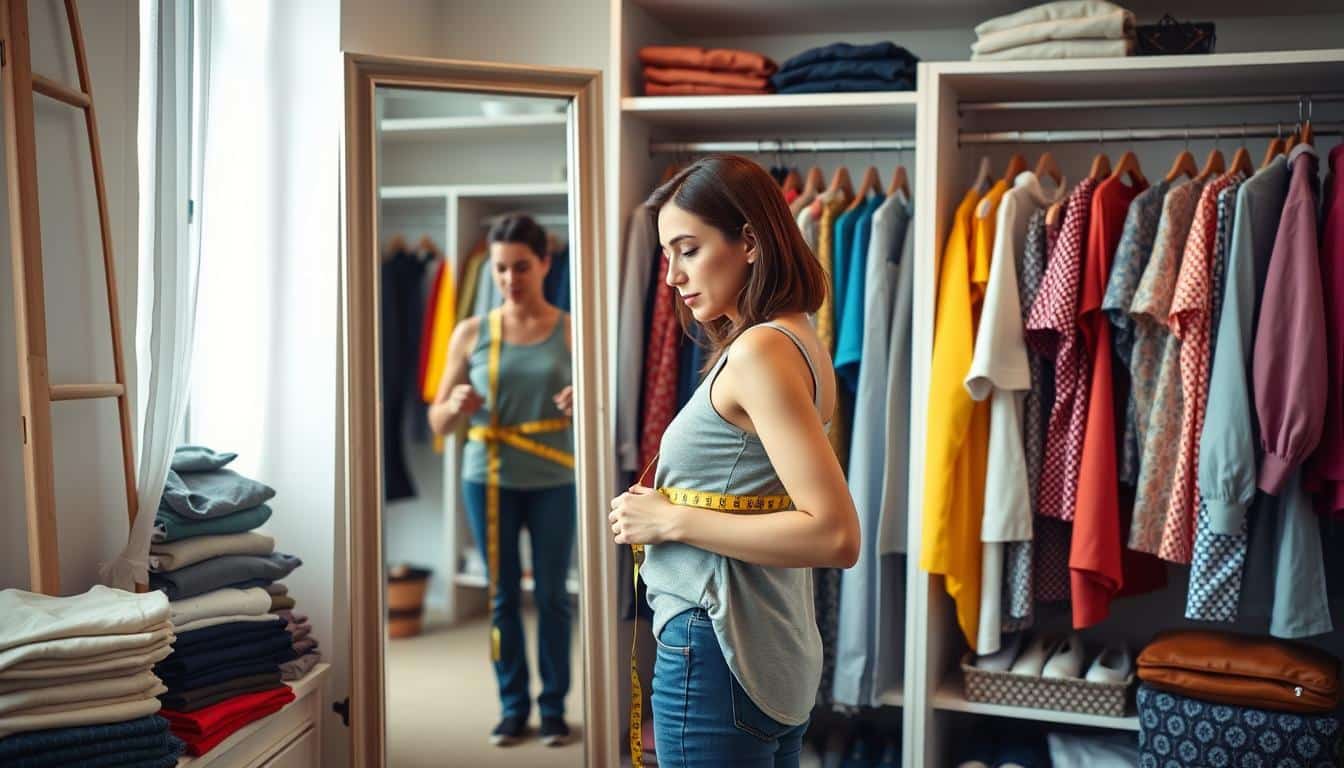
Dress in thin, snug clothes and stand easy. Measure yourself with a soft tape and use a full mirror or a friend’s help.
- First measure your height without shoes, standing tall.
- Measure your chest at the fullest part. Add an underbust measurement for bras.
- Note your waist. Mark your high hip 8–9 inches below your waist and measure the fullest part of your hip.
- Measure your inseam from crotch to ankle for pants, and note the rise if you can.
- Also measure shoulder width, arm, thigh, and calf for fitting pants or boots.
- Write down measurements to the nearest 0.25 in or 0.5 cm and keep them in a digital note.
- Decide if you want clothes snug, true, or loose. For tops, you might add 1–3 inches for comfort.
Tools and resources: conversion calculators, printable charts, and apps
To match your measurements with foreign sizes, use reliable conversion tools. Always check the unit of measurement before converting.
- Use size converters from retailers like Uniqlo or H&M for fast checks.
- Have a printable chart for each brand. Ensure to print measuring strips at 100% scale.
- Try apps like Virtusize, True Fit, or MTailor to match your body with clothes.
- Be careful with AR try-ons and virtual assistants. Always compare their suggestions with your own measurements and other reviews.
Brand examples and practical conversion cases (tops, bottoms, shoes)
Check brand conversion examples to understand size translations. Uniqlo in Japan and the U.S. may differ in chest sizes. Always match the chest size, not just the size letter.
For Asian bottoms, you might see sizes like CN 165/76A. Convert your waist and hip measurements to match, but check rise and inseam on their own. Remember, many styles from East Asia might assume a shorter inseam.
Asian shoe brands often list sizes in Mondopoint or cm. Measure your foot from heel to toe and add a bit for comfort. For a US women’s 8, a Japanese chart might suggest 24.5 or 25.0 cm, based on the shape of the shoe.
Return policies and shopping tips to reduce sizing risk
Check the return policy before buying. Opt for sellers offering free returns and clear time frames. Stores like Amazon and Zappos, or brands with US locations often make returning items easy.
- Look for sizing tips on product pages for hints if an item runs big or small.
- Check reviews with photos and sort them by height and weight to get better insights.
- If unsure about size, get two sizes if free returns are available and keep the one that fits best.
- Consider ordering swatches or planning for adjustments for expensive items. Know the cost of local alterations in advance.
- Remember to account for longer delivery times, customs, and restocking fees for international orders.
Using simple routines, reliable tools, and printable charts for each brand makes shopping easier. Follow the guide for size conversion and the checklist for a good fit. Then, use the tips for returns and shopping smartly to buy with confidence.
Common mistakes shoppers make and quick fixes
Online shopping fails often due to a few common errors. These tips help you avoid sizing mistakes. This way, you get clothes that fit perfectly without the guesswork.
Choosing the wrong size based on your usual label
Don’t think a U.S. medium is the same in Asian brands. Measure your bust, waist, and hips in centimeters. Match them to each brand’s size chart. If you’re between sizes, pick the larger size. This avoids tightness at your bust or hips.
Ignoring fabric stretch and fit descriptions
Always check the fabric before buying. Clothes with 5% spandex stretch differently than 100% cotton ones. For tight, low-stretch fabrics, consider a larger size. For stretchy materials, stick to your measurements but be ready for a different feel.
How to interpret customer reviews and photos for sizing clues
Do not ignore reviews. The best ones list height, weight, and usual size. Use these details to judge fit. Look for comments like “runs small in shoulders.” Focus on reviews that share measurements and are deemed most helpful.
- Measure your favorite clothes flat and compare their size to the product’s listed measurements.
- Use customer photos to judge how clothes fit on similar bodies. Check the fit at the shoulders, waist, and hem.
- Be careful with unbranded sellers. Without a size chart or reviews, use measurements and buyer photos to guide you.
Conclusion
Ending the guide, we talk about practical steps. First, get your body measurements right and write them down. Choose the specific measurements of garments in centimeters over vague size labels. This helps when you look at US and Asian size charts.
Know that Asian sizes usually run smaller and cater to different body types. Use tools like size converters, printable charts, and apps to find your best fit. Also, look at customer reviews and pictures. If unsure, pick the size for your biggest part or get two sizes when you can return for free.
Have a file for your measurements and notes on brands like Uniqlo and Nike to make future shopping faster. This guide on sizing shows planning and measuring can take the surprise out of buying clothes from other countries.
When comparing US to Asia sizes, be methodical, try things out, and keep track of what works. Tools like measurement sheets or conversion apps make shopping simpler. Store your sizes in your account or get a cheat-sheet for sizing to make buying easier and boost your confidence over time.
Content created with the help of Artificial Intelligence.