Anúncios
Shopping on Shopee from the United States can be tricky. That’s because listings use Asian sizing and metric measurements. This short guide aims to simplify Shopee sizing for Shopee US shoppers. You’ll learn why converting Asian to US sizes is key and how to reduce returns due to sizing issues.
Many sellers list garment sizes in centimeters, making conversion to inches crucial. This guide covers the differences in fit and how international sizes often don’t match US sizes. It focuses on standard garment measurements—like bust, waist, hips, length, and sleeve—to offer practical, industry-aligned advice.
Anúncios
Here’s what you’ll find: detailed sizing explanations, step-by-step conversion methods, quick conversion tables for various clothing types, and precise measuring tips. It includes easy examples and a fast cm to inches conversion method. This way, you can shop confidently.
Use the measurement and conversion guide before ordering. This effort helps avoid fit surprises and returns, ensuring satisfaction with your purchase. Treat this guide as your go-to for smarter international shopping on Shopee.
Key Takeaways
- Shopee Asian Size Charts often use centimeters; learn to convert cm to inches before buying.
- Asian to US size conversion requires comparing garment measurements, not just label letters.
- Measure bust, waist, hips, and length accurately to match seller charts and reduce returns.
- Quick conversion tables and simple calculators make Shopee sizing easier for US shoppers.
- Check seller-provided measurements and reviews for real-fit clues before purchasing.
Understanding Asian sizing vs. US sizing
When you shop on Shopee, you’ll face differences in Asian and US sizing. It’s easy to think S, M, L sizes are the same as in the US. But this can lead to surprises, like clothes fitting tighter than expected.
Why Asian sizes run smaller: fit philosophies and regional differences
Different parts of East Asia have unique sizing methods. Asian garments are often made to fit closer to the body. In contrast, US and European clothes tend to be looser, allowing for layering.
Asian countries have their own sizing standards. For example, sizes in Japan and Korea are usually slimmer than in China or Southeast Asia. That’s why an M size might feel different across stores.
Common size labels on Shopee listings (S, M, L, XL, XXL) and what they mean
Size labels like S, M, L on Shopee aren’t universal. Most sellers will offer a measurement chart. Always check this chart before choosing a size.
Generally, an Asian S might be similar to a US XS–S, and so on. These are just rough guides though. Always compare actual measurements to be sure.
How measurements (cm/inches) are used differently in Asian charts
In Asia, sizes are often listed in centimeters. If you’re from the US and used to inches, you’ll need to convert these measurements.
Size charts could show the item’s size or fit recommendations. Item sizes show actual dimensions, while fit guides suggest sizes for your body. Make sure to understand which you’re looking at, and check for fabric stretch or seam allowances.
Tips for interpreting ambiguous size descriptions from sellers
If a size chart is missing, ask the seller for one. Request both the item’s measurements and the suggested sizes for bodies.
Look for clues in the description, such as slim fit, regular fit, and fabric stretch. If unsure, go a size up, especially if reviews say the item is tight.
Reviews and customer photos can also help you understand the real size. These tips can prevent surprises when comparing Asian and US sizes.
Shopee Asian Size Charts: Full Conversion Guide
Shopping on Shopee can be confusing because they use Asian sizes. This guide will show you how to convert those sizes into US sizes easily. It involves using the seller’s size charts and your own measurements.
Step-by-step method to convert Shopee sizes to US sizes
- Look for the seller’s size chart. Check if the numbers are for the body or the item itself.
- Measure your body: bust/chest, waist, hips, shoulder width, and inseam. Write them down in cm and inches.
- Convert measurements. Make sure the seller’s chart and your measurements are in the same unit.
- Figure out the ease you need. Adjust the garment size by adding or subtracting inches based on the material and style.
- Choose a size based on your adjusted measurements. Size up if you’re layering or between sizes.
Quick conversion tables for tops, bottoms, dresses, and outerwear
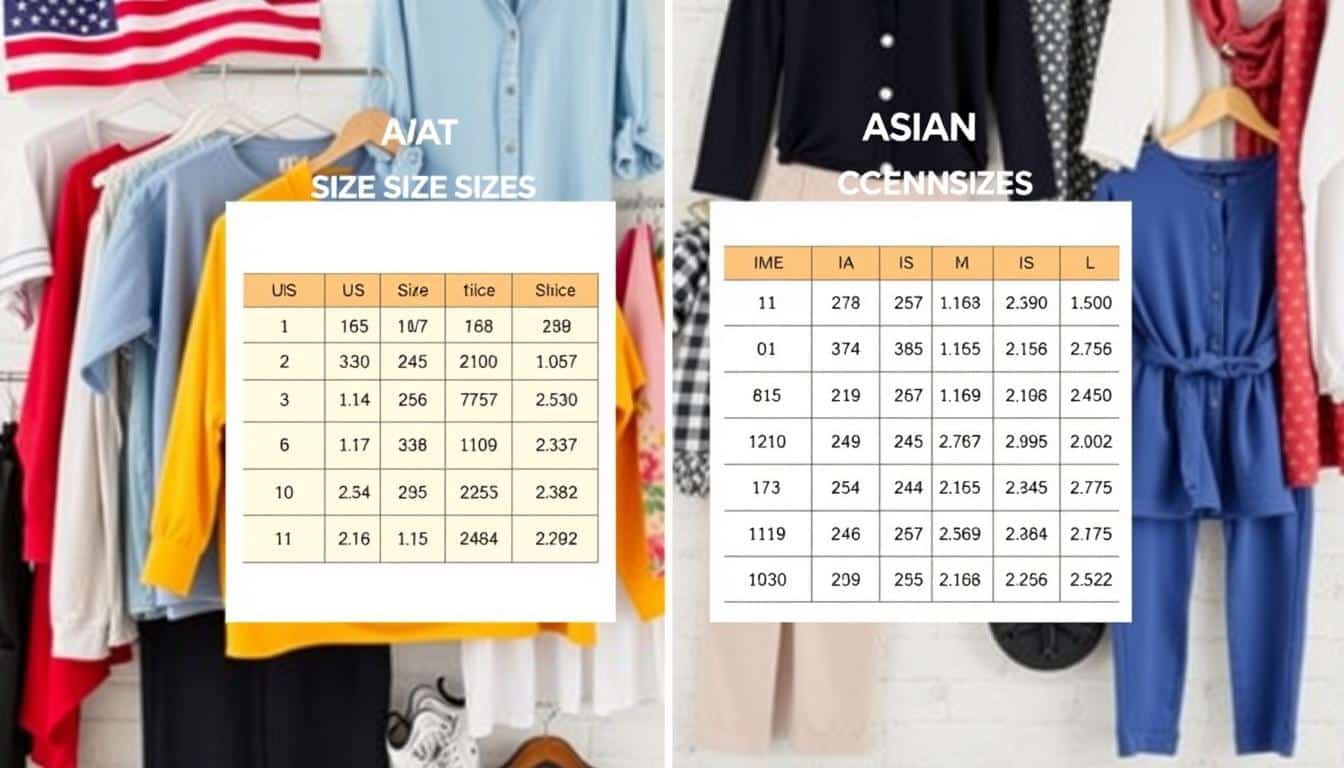
Begin with quick tables for a rough idea, then double-check with the seller. For tops, Asian Size S is like US XS–S. M is like US S–M, L is US M–L, and so on.
For pants, look at the waist in centimeters rather than the size label. Judge dresses and jackets by bust, hip, and length. Jackets are usually made bigger for layering.
How to convert measurements: bust/chest, waist, hips, length, sleeve
Measure around the largest part of your chest or bust. For a snug fit, choose a size that’s the same or slightly bigger. For a looser fit, add a few inches.
Measure your waist for skirts and pants. Use exact measurements for a tight fit. Stretchy materials won’t need as much extra room.
For hips, measure the widest part. Your pants or skirt should fit your hips plus any extra room you want. Check the lengths of clothes and sleeves too. Items may be shorter than in the US, so make sure they’re long enough.
Using size charts with centimeters vs. inches: calculator and examples
To convert, remember 1 inch equals 2.54 cm. For example, a 34-inch chest is 86.36 cm. Having a calculator handy helps.
Here’s an example: If your chest is 36 inches (91.4 cm) but the chart says 92 cm for M and 96 cm for L, choose L for a bit more space. If the material is stretchy, M might fit better.
Keep your measurements in both units for easy shopping. A quick note with your size in cm and inches will help avoid returns.
How to measure yourself accurately before ordering
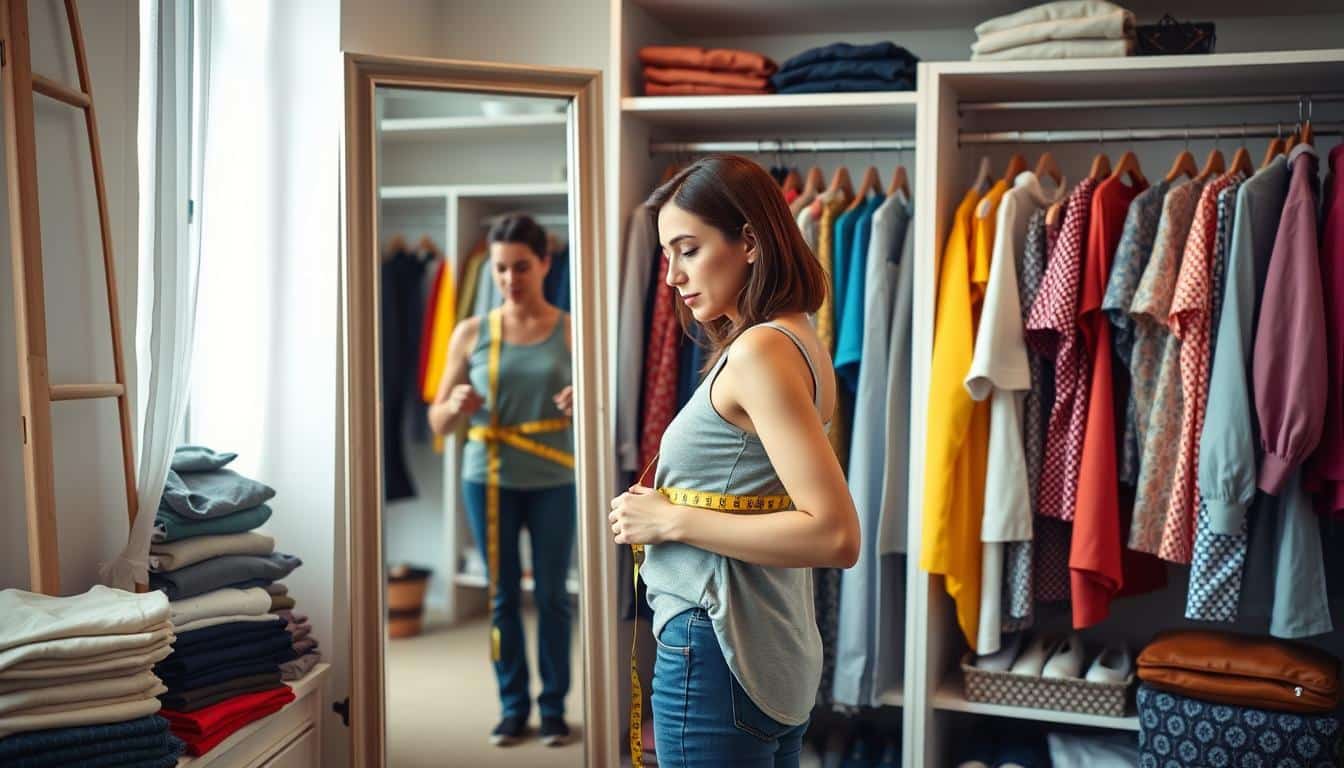
Before choosing a size on Shopee, take a moment to measure yourself properly. It’s key to use a simple process. This helps you measure accurately and match your sizes with the seller’s chart.
Tools you need:
- Soft cloth tape measure; if unavailable, use a piece of string and a ruler.
- Full-length mirror and form-fitting undergarments or thin clothing.
- Notepad or phone to record numbers and a helper for shoulder or back measures.
Tape measure guide
Hold the tape level to the ground. It should be snug, allowing a finger underneath. Always breathe normally when measuring your chest and waist to ensure consistent results.
Detailed measuring guide
- Chest/Bust: Measure the fullest part across the nipples, keeping the tape level. This is crucial for getting the right fit for tops and dresses.
- Waist: Locate your natural waist, which is typically above your belly button. The tape should be snug yet comfortable.
- Hips: Measure the widest part of your hips and buttocks, about 7–9 inches below your waist. Ensure the tape stays parallel for accurate results.
- Inseam: Measure from crotch to ankle, or compare with a well-fitting pair of pants, laying them flat.
- Shoulder width and sleeve: A friend should measure from one shoulder to the other across your back, and from shoulder tip to wrist with your elbow slightly bent.
Common measurement mistakes and how to avoid them
- Don’t measure over thick clothes as it can give bigger numbers; use thin layers or underwear for better accuracy.
- Using a tape that’s too tight or too loose can lead to wrong measurements; it should be snug and straight.
- Avoid incorrect landmarks, like measuring the hips too high. Use a mirror or a friend to help stay precise.
- Bad posture or holding your breath can alter your measurements. Stand naturally and breathe easy for the best results.
Recording and comparing
-log each measurement in both inches and centimeters. Keep a “my measurements” note on your phone. This makes it easy to share with sellers. Compare your measurements to the seller’s charts, noting whether they list the body or garment sizes. Remember to add your desired ease before choosing.
Practical shopping tips for buying on Shopee from the US
Shopping across borders is easy with a little planning. Use these tips to ensure you pick the right size, avoid delays, and know exactly what you’re buying. It’s important to read descriptions, compare measurements, and think about shipping and returns early.
Read product descriptions and seller-provided size charts carefully. Look through all the pictures, especially size chart images. Pay attention to the model’s height and the size they are wearing. It’s also crucial to check the fabric’s content and stretch. Make sure you understand if the measurements are for the item laid flat or on the body, and note the allowed measurement differences (e.g., ±1–3 cm).
Check seller reviews and customer photos for fit clues. Focus on listings with a lot of reviews and customer photos. These can show you the true fit of the item. Look for comments about items being too small or needing to size up, and specifically seek out reviews with photos. Checking when the reviews were posted can help you see if sizes have changed over time.
Choose between tailored fit, loose fit, and oversized styles. Think about the style you want by reading the item’s description and looking at the photos. If you’re choosing slim or tailored pieces, consider sizing up for comfort or if you’re between sizes. For oversized items, sizing down might work, but always double-check the measurements and fabric to be sure.
Know the return policy Shopee and seller rules before buying. Find out if the seller allows returns on international orders and remember any time restrictions. Some products shipped from Asia might not qualify for returns once they get to you. Also, consider any extra fees like taxes or duties when calculating your total cost.
Plan around international shipping times. Shipping from Asia could take weeks, depending on what shipping method you choose and customs. If you’re buying something for a special occasion, order well in advance or opt for faster shipping. Don’t hesitate to ask the seller specific questions about sizes to get a perfect fit. Good sellers usually give personalized advice.
- Always measure yourself and compare to the seller chart.
- If in doubt, ask the seller for garment flat measurements.
- Use multiple reviews and customer photos to confirm fit.
- Keep international shipping times and return policy Shopee in mind before checkout.
Conclusion
First, measure yourself and write down the numbers. Use measurements in cm or inches provided by sellers, not just size labels. Don’t forget, 1 inch equals 2.54 cm. Consider how stretchy the fabric is and how loose or tight you want the fit.
Then follow these steps: measure, compare with the seller’s chart, think about how you want it to fit, look at reviews and customer photos, and check the return policy. Use the conversion tables and examples here to easily convert sizes for each purchase.
Keep your measurements and conversion charts handy. If something’s not clear, don’t hesitate to message the seller. These last pieces of advice will help you shop on Shopee without worry about getting the wrong size.
Content created with the help of Artificial Intelligence.