Anúncios
Shopping on Shein can be tricky if you’re not sure about sizes. This guide helps U.S. buyers understand how to read Shein size charts correctly. This way, you can find the perfect fit the first time you order.
You’ll find out where to look for the size chart for each item. Learn how to measure your body accurately. And, discover how to use these measurements to choose sizes confidently. Our goal is to help you make fewer returns and feel great about your Shein purchases.
Anúncios
Our advice is based on real online shopping tips. We cover how size conversions work, the impact of different fabrics, and why customer reviews are valuable. These tips are especially helpful for petite, tall, and plus-size buyers.
Key Takeaways
- Locate the Shein size chart on each product page before choosing a size.
- Measure bust, waist, hips, and length with a tape measure for precise comparisons.
- Use your measurements, not just size labels, to convert to U.S. sizes accurately.
- Check fabric composition and fit notes to decide if you should size up or down.
- Read customer reviews and photos for real-world fit clues beyond the Shein size guide.
Understanding Shein Size Charts and Why They Matter
When shopping on Shein, view each listing as a separate store. The Shein size charts show measurements for each product, not a universal size. This method helps you match your measurements with the item you want to buy.
How Shein size charts are structured
On most product pages, you’ll find a Shein size table. It includes bust, waist, hips, and sometimes length measurements. Sizes are indicated as XS, S, M, L, XL, and numerical sizes like US 2–12 could be seen too.
Some size charts show body measurements and garment measurements. Body measurements refer to the person, while garment measurements display the clothing’s size when laid out. Not all listings have both, so it’s good to check each one carefully.
Common sizing terms and abbreviations
To avoid confusion, know the common terms. Bust measures across the chest at its fullest point. Waist shows the narrowest part of your middle. And hips are measured at the widest point around your buttocks.
You will often see abbreviations: CM stands for centimeters, IN for inches, and S/M/L represent size ranges. Knowing these abbreviations makes it easier to understand the charts and ensure you choose the correct size.
Why international sizing can differ from US standards
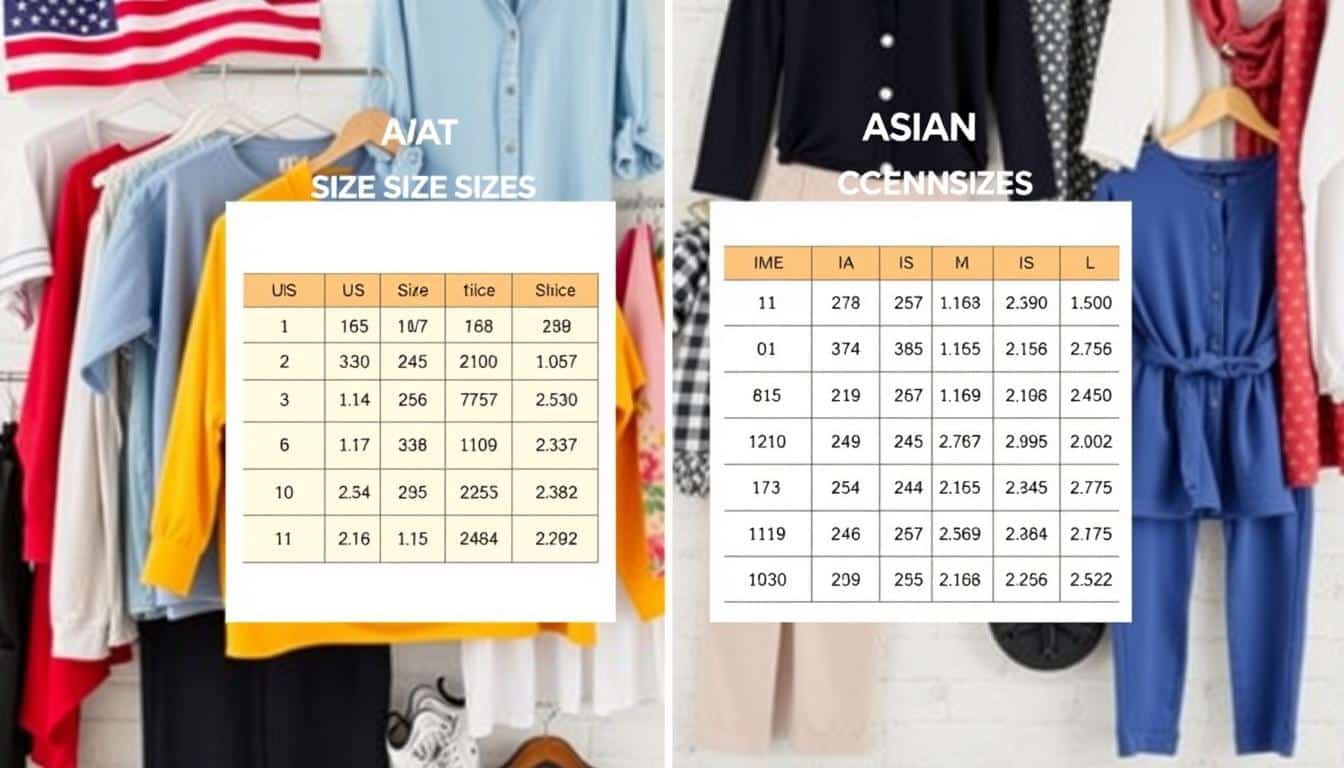
Shein gets its items from around the world, meaning sizes might be based on Asian or European standards. So, an M from one item might fit like a small in US sizes.
Converting sizes, like US 6 to UK 10, isn’t always accurate. The best solution is to compare your measurements with the Shein size chart on each product page before you buy.
How to Read Shein Size Charts Accurately
Before you pick a size, take a moment to find the right chart. Shein’s size link is usually near the size selector or under a “Size & Fit” tab on product pages. On your phone, it might be in a dropdown or below the item’s description. Some items have both a general guide and a product-specific chart; always open the product-specific chart if available for the most accurate info.
Locating the size chart on product pages
First, click on the size selector. Then, look for a “Size & Fit” or “Size Chart” label. If you can’t find the chart, check the product details, Q&A, and customer reviews for measurements. When unsure, reach out to Shein customer service or check photos from customers for measurements.
Interpreting measurements: bust, waist, hips, and length
First, check if the chart lists body or garment measurements. Shein usually shows body measurements. These are the measurements around your body that the clothes are designed to fit. For bust, waist, and hips, think about the full circle around you; length is measured straight up and down. Most charts have measurements in both centimeters and inches. Remember, 1 inch is the same as 2.54 cm for conversions.
When looking at Shein’s sizes, think about the fabric and how clothes fit. For clothes that don’t stretch, you might want more room. Stretchy clothes can fit closer to your body. If something is meant to be tight, expect less room than in a loose style.
Comparing Shein sizes to your body measurements
To find your size, first accurately measure yourself. Match your measurements with the chart. If you’re between sizes, your choice depends on the fabric and how you want it to fit: go larger for non-stretchy clothes, smaller for very stretchy clothes if you prefer a tight look.
If the chart shows garment measurements, compare these to a similar item you already have. Measure the item while it’s laying flat. This helps you guess how the Shein item will fit you. Always consider the fit notes; an oversized tee fits differently than a slim blouse, even if the numbers are similar.
- Tip: Save your measurements for faster shopping next time.
- Tip: Check customer photos and reviews to see how sizes fit in real life.
Measuring Your Body Correctly for Online Shopping
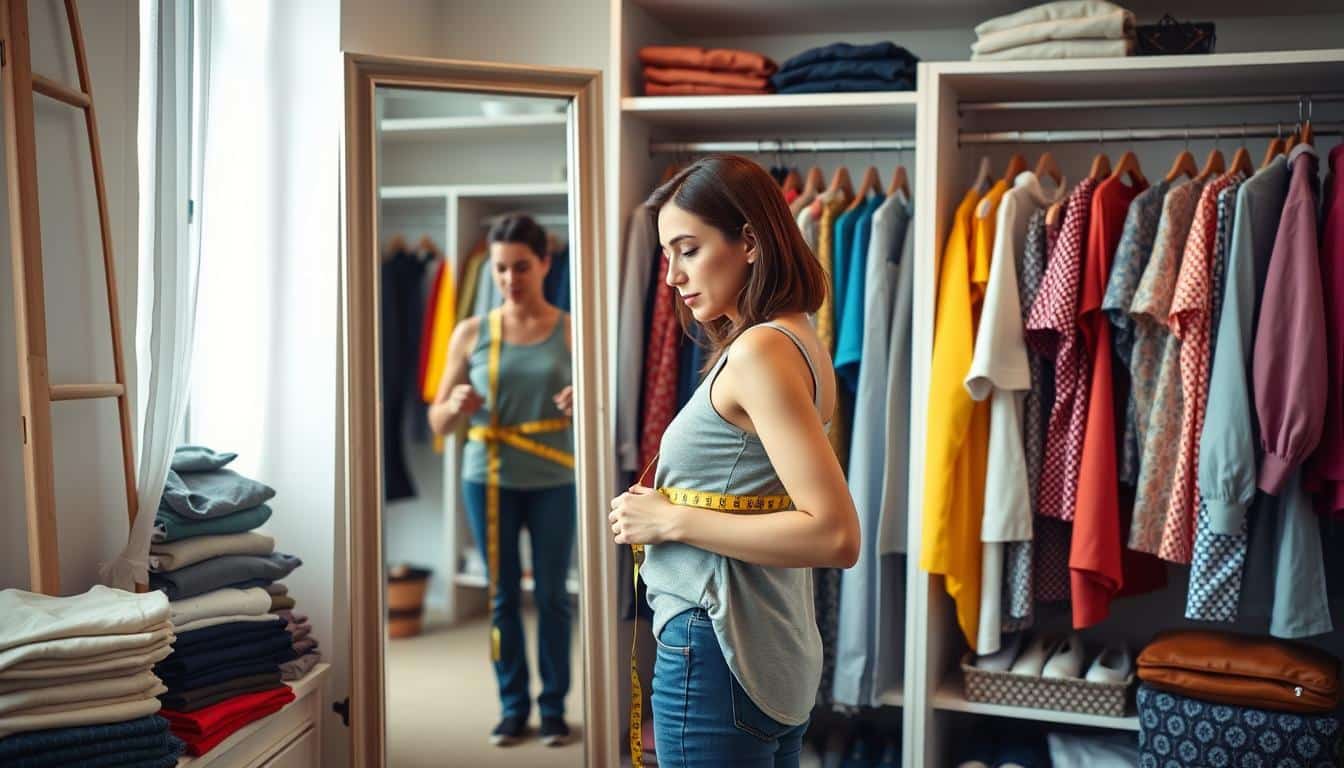
To start, you need a few simple things: a soft tape measure, a mirror, and maybe a friend. It’s best to wear something snug or just your underwear. This way, your body’s true size is what you measure. This guide makes online shopping less of a gamble.
Tools you need:
- A soft tape measure that shows inches and centimeters is crucial for accurate measures.
- A full-length mirror helps ensure the tape is straight if you’re measuring by yourself.
- A friend can help you get correct measurements for tricky spots like your hips and back.
Step-by-step measuring guide:
- Bust: Loop the tape around the fullest part of your chest. The tape should be level on your back and not tilt. Wearing a bra without padding will give you the most true measurement. This is crucial for tops and dresses.
- Waist: Look for the tiniest part of your waist, often above your belly button. Just stand easy and breathe normal while measuring.
- Hips: Measure where your hips are the widest, usually 7–9 inches below the waist. Keep your feet together and the tape flat for the best measure.
- Length and inseam: For shirts, measure from your shoulder down to where you want the bottom. For dresses, it’s shoulder to the bottom hem. For pants, measure inside the leg from crotch to ankle.
Tips to ensure consistent measurements every time:
- For accurate hip numbers, stand straight with your feet together.
- Measure twice to be sure and pick the bigger number if they don’t match.
- Write down your measurements in both inches and centimeters. Keep a personal size chart for shopping.
- Check your measurements again if your weight changes or if you often change clothing styles.
Follow this guide to measure your body when shopping online. It helps take out the guesswork. With these tips, measuring for clothes online, like on Shein, becomes much simpler. You’ll get a fit that’s likely to be perfect every time.
How to Convert Shein Sizes to US Sizes and Other Systems
Knowing how to convert Shein sizes to US sizes makes shopping easier. Start by looking at the product’s measurement chart. It helps you find a close match, but it’s not always perfect.
Using size conversion charts and when they can mislead
Shein’s size charts turn XS–XL into US, EU, and UK sizes. Think of this as your first step. Because brands differ in grading, an “M = US 8” might fit differently based on its shape and material. Check the bust, waist, and hip sizes against your own before picking a size.
Examples: converting petite, plus, and tall sizing
Petite sizes mainly change in length. If a dress is marked petite, check if its length and sleeves fit your height.
Plus-size items have their own charts. Use these instead of standard ones. Tall sizes increase in length but keep the chest and waist similar. Without tall or petite options, look at garment length and inseam to figure out fit.
If you’re a US 8 with a 36-inch bust and Shein’s medium is 34–35 and large is 36–37, choose large. This helps you choose the right US size from Shein’s options based on actual measurements.
When to rely on measurements instead of size labels
Always choose centimeters or inches over size names. Actual garment measurements are more reliable than size names. Measure a piece of clothing you like and compare it to Shein’s chart.
Be extra careful with final sale items or fast fashion buys. Look closely at the numbers. Reviews and customer photos can show if a fabric is stretchy, helping you decide between size labels and actual measurements.
- Check bust, waist, hips, and length in the product chart.
- Compare those numbers to a well-fitting garment you own.
- Favor measurements to avoid size chart mistakes on nonstandard cuts.
Reading Fabric, Fit, and Product Details to Improve Fit
Getting the perfect fit isn’t just about measurements. It’s key to also consider the fabric, how it’s made, and what the seller suggests. This helps you imagine how clothes will look on you. Use the following advice to understand product info and make better choices.
How fabric stretch and composition affect fit
Check the fabric details to know its flexibility. Clothes with spandex or elastane can stretch and snap back easily. This means you can pick sizes that are closer to your body size. But, items made from woven materials like linen or rayon are less stretchy. You might need to pick a bigger size for comfort.
Knitted items, like jersey and ribbed tops, usually stretch more than others. But, heavy embroidery, linings, or strong seams can make clothes less flexible. This can also affect how they hang. Keep these points in mind when looking at product descriptions.
Recognizing fit descriptions: slim, regular, oversized
Clothing descriptions often mention the fit style. Slim fits are tight and need precise measurements. Regular fits should closely follow the size chart. Oversized clothes are bigger on purpose and might require buying your actual size or one size smaller.
Don’t forget to check the size details like sleeve length and hip room. Sellers might advise to “size up for a relaxed fit.” Mesh these tips with the size chart for a better idea of the fabric and fit from Shein.
Using model info and product reviews to gauge real-world fit
Knowing the model’s height and size can help you guess the fit. If a model is 5’9″ and wears a small, use this to gauge how it might look on you. Customer reviews are super helpful when model info is missing.
- Look for reviews from people who share their measurements and the size they chose.
- Focus on reviews from verified buyers and pictures to see the actual fit and fabric.
- Pay attention if many reviews talk about issues like tightness or the fabric stretching out.
Reviews can guide your buying decisions. Also, check a fabric stretch guide if you’re unsure. This way, you can set realistic expectations for your online purchases.
Practical Tips to Avoid Size-Related Returns and Disappointments
Shopping smart reduces the need to return items. It saves time and money on fast-fashion sites. Start by matching garment type and fabric with your fit preference.
When to size up or down based on style and fabric
Size up for fitted, non-stretch woven tops, structured dresses, blazers, and heavily lined pieces. These don’t stretch much. So, going one size larger usually means better comfort and movement.
Stick with your size or go smaller for stretchy knits and oversized items if you like a snug fit. For bodycon dresses and tight tops, use your bust and hip sizes. Size up for a bit more room.
For high-waist pants or skirts, check your waist and hip sizes. If you’re between sizes and the fabric is firm, pick the bigger size. This avoids any tightness at the hips and seams.
Saving and using your personal size chart for future orders
Create your own size chart. Note your bust, waist, hips, height, and fit preference, like “looser waist in skirts.” Have this chart ready when you shop.
Remember which sizes fit well by Shein’s brand or product types. Write down your sizes in inches and centimeters. Update it if your body changes.
How to read customer photos and review measurements effectively
Look for reviews by people who share their measurements and the size they bought. Compare their photos with your body shape, not just height.
Value patterns in reviews over single opinions. If many say an item is too small or large, believe it. Look at how clothes fit in pictures at the shoulders, bust, length, and how the fabric falls.
See when reviews were posted to ensure product quality hasn’t changed. Focus on photos showing details that fit your size chart and style likes.
- Measure yourself and keep that info ready for shopping.
- Remember when you sized up or down on Shein based on the fabric and cut.
- Analyze reviewer photos and common feedback for a better fit guess.
Conclusion
Here’s a quick checklist for Shein sizes before you buy. Always check the size chart for the product. Make sure to see if the chart uses centimeters or inches. Then, use a soft tape to measure your bust, waist, hips, and the length you want. Match these numbers with the chart.
Always go by your actual measurements, not just size names or conversion charts. Consider the fabric’s stretchiness, its make-up, and whether the fit is slim or loose. Look at photos of the model and customers to see how the clothes fit in real life. If you’re stuck between sizes, these pictures can help you decide.
Some final advice for shopping on Shein: set up your size profile, double-check whether the sizes are listed in inches or centimeters, and read reviews for any sizing advice. By taking your measurements correctly and paying attention to the details, you can shop with confidence. You’ll likely have fewer returns and be happier with your purchases. This method is key to understanding Shein’s size charts.
Content created with the help of Artificial Intelligence.