Anúncios
Shopping on Shein and Temu can be a way to save money and try new styles. But, the size differences between Asia and the US often mean we have to return items. This guide will show you how to convert Asian sizes to US sizes to get clothes that fit right the first time. It gives you easy steps to avoid guesswork and the hassle of returns.
We’ll talk about the main sizing systems in China, Korea, and Japan. You’ll find out how sizes like S/M/L or numbers match up to specific measurements. This means you’ll learn how to use a size chart for Asian to US sizes, turn centimeters into inches, and focus on actual measurements rather than just size labels.
Anúncios
This content is for U.S. shoppers who buy from international fast-fashion sites and want simple instructions. You will get tips for taking your measurements, general guidelines for choosing sizes in tops, bottoms, and dresses, and specific help for converting Shein and Temu sizes. This way, you can shop more confidently.
Remember, Asian sizes are usually smaller than US sizes. So, start by measuring yourself in centimeters and inches. We will give you a Shein sizing guide for the US, sample conversion charts, and tips for different types of clothing. These tools will help you find the perfect fit every time.
Key Takeaways
- Asian sizes often run smaller than U.S. sizes; measure your body first.
- Use an Asian to US size chart and compare measurements, not just labels.
- Convert cm to inches when needed to match Shein size conversion and Temu size conversion charts.
- Look at fabric stretch and garment type for better fit decisions.
- Read customer reviews and seller notes to confirm real-world fit before buying.
How to Convert Asian Sizes to US Sizes (Shein/Temu)
Shopping on Shein or Temu can be tricky, like learning a new language. Small errors can lead to returns, wasted time, and frustration. Understanding Asian vs US sizing helps you find the right fit before buying.
Why size conversion matters for Shein and Temu shoppers
Understanding Shein vs US sizes and Temu’s sizing is important due to international vendors. Knowing how to convert sizes avoids unnecessary returns and gets you clothes that fit faster. Buyers who use size charts tend to be happier and face fewer surprises.
Overview of common differences between Asian and US sizing
Asian sizes, like S/M/L or numbers, are often one to two sizes smaller than US sizes. Brands usually show body sizes in centimeters, not garment sizes. Also, body shapes, like shoulder and torso sizes, differ in China, Korea, and Japan.
Japanese sizes are usually smaller than those in China or Korea. This difference is why there’s confusion between Shein vs US sizes or Temu’s sizing. To get it right, always check the chest, waist, and hip measurements on the item’s page.
Quick conversion rules of thumb for tops, bottoms, and dresses
- Tops: Add 1–2 US sizes. A Medium in China/Korea/Japan often matches a US Small or XS. Start with chest or bust sizes when choosing a top.
- Bottoms: Increase by 1–3 sizes, depending on the brand and fit. Waist sizes may be in inches or local sizes. Look at waist and hip sizes closely to avoid issues.
- Dresses: For dresses, use top sizing for the bust and bottom sizing for the hip. If you’re between sizes, choose the larger size for length or fit.
It’s best to use a size guide focused on measurements instead of S/M/L labels. Consider fabric stretch, cut, and customer photos before ordering on Shein or Temu.
Understanding Asian sizing systems and measurements
Shopping on places like Shein and Temu means you have to learn how sizes change between countries. Asian styles might use letters, numbers, or both. Knowing these systems makes it easier to find what fits before you buy.
Different systems used across countries
China often has numeric sizes and garment codes like 160/80A for height and chest. You’ll see a Chinese size chart with measures in centimeters. Korea uses S/M/L, but their clothes are often shorter in the body and sleeves. Translating Korean to US sizes means paying close attention to shape. Japan has letter sizes and exact measures in centimeters, and their clothes are generally smaller than in China or Korea. Shein and Temu have items from all three places, affecting how they fit.
How Asian sizing labels (S/M/L or numbers) map to measurements
In Asia, S/M/L sizes match specific measurements, different from the US’s way of sizing Medium. An Asian M, for example, fits a chest of 88–92 cm. Numeric sizes might be like 165/84A, showing height and chest, or regional codes you convert to inches or US sizes. Always look at the actual garment measurements—bust, waist, length. Comparing these to your own sizes gives you the best match.
The role of body measurements versus label sizes
Trust your own measurements: bust, waist, hips, inseam, and shoulder width. Sizes change depending on the brand and country, so measuring yourself and comparing to the product’s size chart is key. Look at the ease listed, which is how loose the garment is meant to be. Choose how snug or loose you want your clothes based on that ease.
Tips for men’s and women’s sizing differences
Men’s and women’s sizes in Asia are different. Men often need to go up a size or more, especially if they are broad or tall. Use numeric sizes as a guide and double-check the item’s measurements to avoid getting the wrong size.
- Always compare body sizes to the Chinese sizing chart or the product’s actual measurements.
- For Korean to US sizes, focus on the fit around your torso and shoulders.
- Adjust for Japan’s smaller sizes using their size conversion info.
- Convert numeric Asian sizes into inches to understand the fit better.
- For S/M/L sizes, match centimeters to get the right US size instead of just the size name.
How to take accurate body measurements for online shopping
Shopping on Shein and Temu becomes easier with correct body measurements. Start by grabbing a soft tape measure and a pen. Note the measurements in both inches and centimeters. For best results, wear thin clothes or underwear. Stand with your feet together and stay relaxed.
Essential measurements to record
- Bust/chest: wrap the tape around the fullest part of the bust with arms relaxed at your sides.
- Waist: find the natural waistline by bending side to side. Measure at the crease or where your pants sit.
- Hips: measure the widest part of your hips and buttocks with feet together for accuracy.
- Inseam: use a good-fitting pant and measure from crotch to hem for a trustworthy inseam guide.
- Shoulder width: measure across the back from one bone to the other straightly.
- Optional adds: include sleeve length, neck size, and pant rise when needed for tailored outfits.
How to measure correctly at home
- Use a soft tape measure. Keep it horizontal and parallel to the floor for side-to-side measurements.
- Always measure twice. Note the numbers in both inches and centimeters right away to prevent mistakes.
- Get help for measuring your shoulders and back. It ensures better precision.
- Keep an inseam measuring guide handy. This way, you can measure pants correctly every time.
Common measurement mistakes to avoid
- Avoid measuring over thick clothes as they alter your true size.
- Ensure the tape is snug but not pressing into your skin. It shouldn’t be too loose or too tight.
- Measure your body as it is now. Don’t guess based on shapewear or recent weight changes.
- Don’t just go by size labels. Always compare with the actual garment measurements on the product page.
Keep a personal size chart with your main measurements and usual size conversions. This helps speed up shopping and cuts down on having to guess your size every time.
Using size charts and conversion tables for Shein and Temu
Start by finding the size chart on each product page. On Shein, it’s near the size selector and suggestions from customers. Temu often puts a size chart in the product details or in the seller’s photos. Look for measurements the seller gives and their size suggestions based on your measurements.
Where to find reliable charts
- Check the product description for a clear chart.
- On Shein listings, click the size chart tab for specific advice.
- In Temu, look in photos or the details for measurement tables and fit tips.
How to read and compare charts
First, see if the chart shows body or garment measurements. Many use centimeters. To use inches, change cm to inches using this: 1 inch = 2.54 cm. Match your size to the chart and add extra room for a comfy fit, like 2–4 inches or 5–10 cm for a good fit.
- For tops and dresses, look at bust and shoulder sizes.
- For skirts and pants, check waist and hips for a proper fit.
- If a chart shows one side’s measurement, double it for the full size.
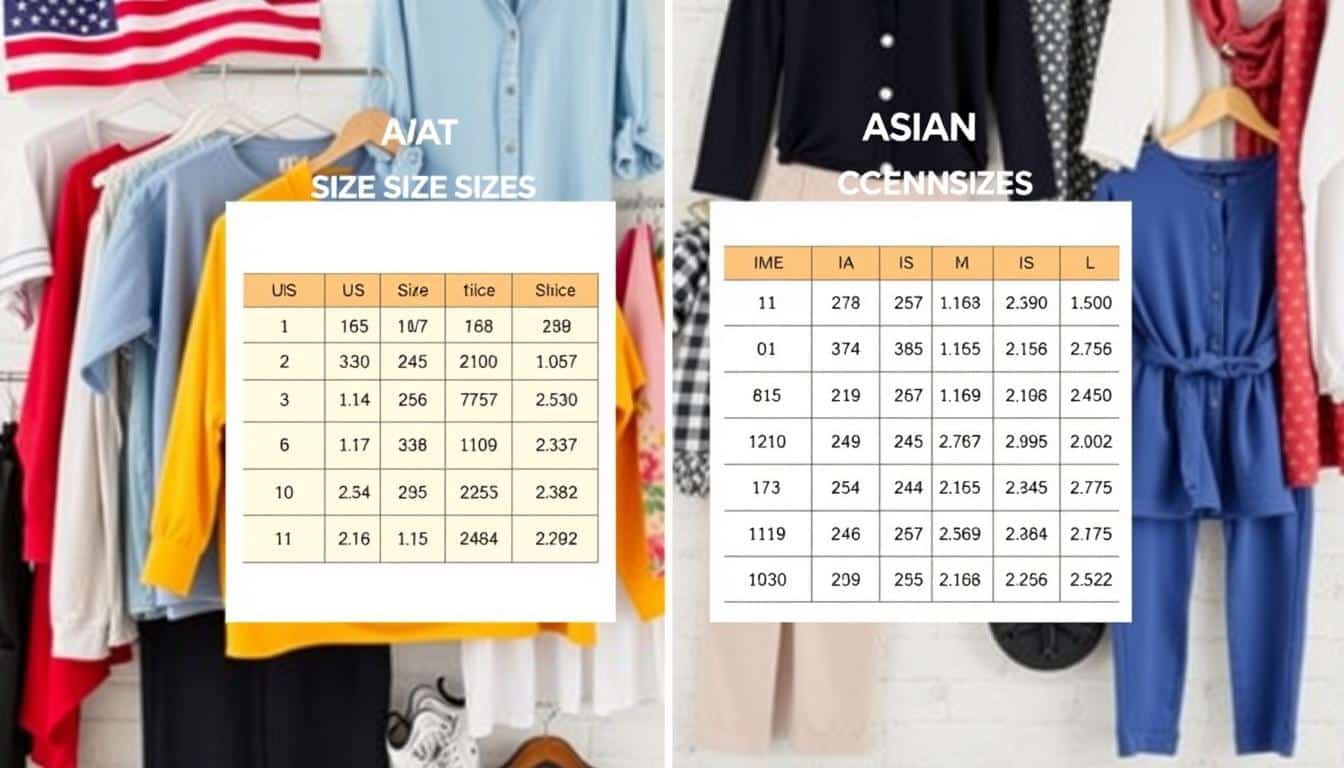
Example conversions with a sample size conversion table
Let’s say a table lists 86 cm bust for size M. That changes to 86 ÷ 2.54 = 33.9 inches. If your bust is 36 inches, go for a size with a 92 cm (36.2 in) bust. For example, an Asian waist size 28 might equal a US 4–6.
Brand sizes can differ. One brand’s 2XL could be another’s Large or XL. Focus on the numbers, not size names, when choosing. If unsure, choose a size that’s a bit larger for non-stretchy fabrics. Also, check reviews to see if items are smaller or fit as expected.
Fit tips by clothing type and fabric for better conversion
Shopping at Shein and Temu means looking closely at key details. You should check measurements, fabric types, and pictures to figure out sizing. These tips make choosing the right size easier and help you avoid returns.
Tops and jackets
Start with shoulder fit; use a guide to help choose. In Asian clothes, shoulders may be narrower, so US buyers might need a bigger size for jackets. Also, look at sleeve and body length in the specs. Choose more fitting knit tops when fabrics like spandex or rayon are used, as they stretch.
Dresses and skirts
Match your measurements to the garment’s waistline. For tight clothes, hips measurements are key. Use the length given in centimeters, and convert it to inches to guess the dress or skirt’s length. If unsure about sizes, opt for the bigger one with stiff fabrics or for a loose fit. Temu’s sizing guides can also aid in this decision.
Pants and shorts
Don’t forget to check the rise of pants to ensure a good waist fit. Compare the inseam and leg opening with what you like. You can choose a smaller size with stretchy fabrics. For non-stretch pants or jeans, use accurate measurements and allow for movement. Notice if tags describe the waist as “relaxed” or “flat” and if there’s mention of elastic.
Outerwear and structured pieces
For coats and blazers, size up to layer under comfortably. Tailored clothes need precise shoulder and chest sizes. Sometimes, seller photos can help check fit over listed measurements. With thick linings, choose comfort and movement over tight fits.
Fabric and care considerations
- Check fabric content: higher spandex increases stretch tolerance.
- Cotton and linen may shrink if not cared for; account for potential change in fit.
- Look for percent of elasticity in descriptions to decide whether to size down or up.
Practical shopping strategies to avoid fit problems
Begin by reading verified reviews for fit, length, and size guidance. Pay special attention to Shein reviews and Temu photos. They show how clothes look on real people.
Use reviewer’s measurements and size details as a guide. Save these tips for quick reference later. This helps you know, for example, if “Shein blouse brand A runs small in the bust”.
Look at the product info for specific measurements and model details. Some list the model’s height and size worn. Use Shein’s size tool and check measurements on Temu too.
Convert your measurements into sizes for each item using a size calculator. Enter your bust, waist, hip, and inseam for the best match. Save your sizes in browser extensions or apps.
Be careful with automatic size tools. They rely on accurate vendor charts. If advice from a size calculator doesn’t match the garment’s measurements, trust the measurements.
Before buying, check the return policy of Shein USA or Temu. Know the return time limit and any requests for photos or tags. Understand shipping costs and times too.
Think about possible alterations for a better fit. Simple fixes can solve many issues. Save some money for tailoring if needed. Include this in your budget for expensive pieces.
When unsure about a size, order two and return the one that doesn’t fit. If returns are expensive, buy only when sure or pick clothes made of stretchy fabrics. Follow US tailors’ advice for easy alterations.
To shop smart, make a quick checklist for each buy. Read Shein and Temu reviews, check the seller’s notes, use a size calculator, and know the return and alteration policies.
Conclusion
To accurately change Asian sizes to US, begin by measuring your body. Record measurements for your bust, waist, hips, shoulders, and inseam. Then, match these with the vendor’s given numbers in centimeters or inches. Choose actual garment sizes over generic S/M/L sizes. Remember, the type of fabric and whether you prefer a tight or loose fit also play key roles.
When shopping on Shein or Temu, always check the size charts, customer feedback, and pictures. This helps confirm if an item will fit. Use size converters as a guide, but don’t rely on them completely. Always opt for a bit bigger size in non-stretch or tailored clothes to skip returns and alterations.
Create your own sizing guide by noting patterns from different sellers. Keep track of which brands and products fit you well. This approach makes buying international sizes easier and less risky. By following these tips, you’ll have a better chance of getting the right size on your first try from global sites like Shein and Temu.
Content created with the help of Artificial Intelligence.